
Dogs resist wearing dog diapers : 3 positive training methods, including treats and how to wear them

introduction
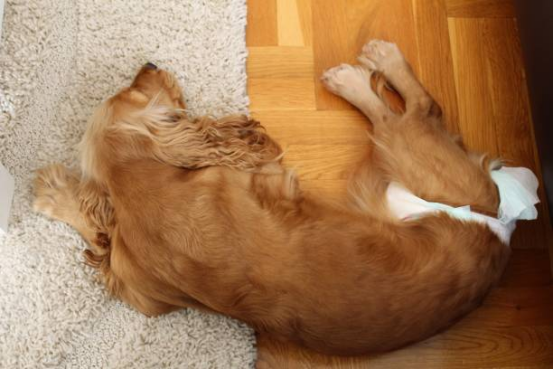
Many dogs may need to wear dog diapers when they are older, recovering from surgery, or because of urinary system problems. But the reality is that when putting dog diapers on dogs for the first time, owners often encounter various situations: dogs struggle, bite the dog diapers desperately , run around the house, and even show anxious behavior due to fear or unfamiliarity.
If the owner forces the dog to wear diapers, it will only make the situation worse. In fact, the most effective way is to use positive guidance, combined with step-by-step training methods and rewards with the dog’s favorite snacks, so that the dog can associate “wearing dog diapers ” with “good things happening.”
This article will be divided into three parts:
- The principles and preparation steps of positive guidance training
- Three specific training methods + dressing steps with snacks
- Common difficulties and adjustment suggestions
1. Positive Guidance Principle & Pre-training Preparation
Why does positive guidance work?
- Rewards replace fear: Dogs will use their experience to distinguish between “doing something → getting something good (treats, petting, praise)” and “doing something → being forced/inducing discomfort.” We want dogs to associate wearing dog diapers with the former.
- Gradual exposure: Do not force your dog to wear it for a long time at the beginning. Introduce gradually, from a few minutes to more than ten minutes, and let the dog get used to it slowly.
- Reduce the sense of unfamiliarity: Before putting it on, let your dog sniff it, scratch it, or even explore it as a toy to help reduce unfamiliarity and rejection.
Preparation before training
Before starting formal training, the owner needs to prepare:
- The right size and style: It should fit snugly but also be soft and breathable.
- Your dog’s favorite treat: small, flavorful, and easy to reward anytime.
- Quiet and familiar environment: Minimize distractions and avoid interruptions from outside noise or strangers.
- Clear small goals: for example, first make the dog willing to smell it, then transition to making the dog willing to wear it for 5 minutes, and gradually upgrade.
2. Three training methods + dressing steps with snacks
Training Method 1: Familiarization Phase (Making Dog Diapers No Longer Strange)
Goal: To make dog diapers a “safe” item for dogs.
step:
- Show and Sniff: Place the dog diapers in front of your dog and let him sniff and paw at them freely, giving him treats and verbal praise immediately each time.
- Physical contact: Place the dog diapers gently next to the dog’s body, then gently touch the waist and thighs, and reward each time you touch.
- Open-style trial: gently put it on the dog but do not fix it, let the dog experience the feeling of being covered, and provide rewards at the same time.
Tip: Don’t rush at this stage. Even if the dog is just willing to come closer, it is worth rewarding.
Training method 2: Short-term wear + good things connection
Goal: To have dogs associate wearing dog diapers with a “pleasant experience.”
step:
- Wear it fully but very briefly: put it on for the first time, keep it in place for only 1–2 minutes, then take it off immediately.
- Rewards + Fun: Give your dog treats as soon as it’s done wearing diapers, then play toys and light games with it, so that it associates “wearing dog diapers ” with “fun.”
- Gradually extend the time: 2 minutes on the first day, 5 minutes on the second day, and 10 minutes on the third day, increasing according to the dog’s acceptance.
- Mid-process rewards: If your dog remains relaxed while wearing dog diapers , you can give him a snack mid-process to reinforce his good behavior.
Training Method 3: Daily Integration Phase
Goal: To enable dogs to wear dog diapers comfortably in daily life situations .
step:
- Practice in different environments: from the bedroom, living room, to short periods of time outside, you can gradually increase the situations.
- Add a command: say a fixed command before each wearing, such as ” dog diapers time”, to help the dog establish a conditioned reflex.
- Integrate with daily routine: wear it at regular times such as before going to bed, going out, and before the owner goes to work, so that the dog can gradually get used to the routine.
- Decreasing rewards and continuous praise: After the dog gets used to it, you can reduce the frequency of snacks, but keep praising the dog in your tone and petting him, and continue to give positive feedback.
3. Common Difficulties & Adjustment Suggestions
| question | Possible causes | Recommended adjustments |
| Dog diapers | Unsuitable material, wrong size, anxiety | Change to soft and breathable materials, re-measure the size, and increase the number of exploration phases |
| It’s awkward to walk after wearing it | Too tight or ill-fitting design | Choose a bag with good elasticity and suitable cut, and let the dog try to walk more in a short period of time |
| Resist in certain situations | External noise, unfamiliar environment, or negative experiences | Practice in a quiet environment first, shorten the wearing time when going out and bring rewards |
| Skin discomfort | Untimely replacement and poor ventilation | Change promptly, keep dry, use gentle cleansing wipes, and seek medical attention if redness or swelling persists. |
4. Sample Training Schedule
- Day 1: Just let your dog smell the dog diapers and reward them immediately after touching them for about 5 minutes.
- Day 2: Try the open-top for 1 minute, rewarding both before and after.
- Day 3: Fully immobilize for 1–2 minutes, dress and play games.
- Day 4-5: Extend the time to 5 minutes, adding rewards in between, so that the dog learns to walk.
- Days 6-7: Practice in different environments (bedroom, before going out) and gradually incorporate wearing dog diapers into your daily routine .
Summarize
for dogs to resist wearing dog diapers , often because they are “uncomfortable” or “uncomfortable”. Forcing them will only increase resistance and make training more difficult.
The key is:
- Positive guidance + snack rewards
- Progressive wearing time
- Combining environment and password
- Observe patiently and adjust in time
of dog diapers , but to train them to wear them voluntarily, comfortably, and habitually . This way, whether wearing them at night, when out and about, or for health reasons, dogs can easily cope, making life more comfortable for both owners and pets.