
your dog’s diapers freeze hard in winter ? 3 tips to preheat your dog’s diapers to prevent cold weather from irritating the skin

introduction
With winter approaching and temperatures dropping, many dog owners face an often-overlooked but real problem: dog diapers become stiff in cold temperatures, making them uncomfortable and potentially causing skin irritation or abrasions. This is especially noticeable in the early morning when dew is thick, the ground is cold, and outdoor ventilation is poor.
dog diapers comfortably in the cold winter HYPERLINK “https://buydogdiapers.com/shop/” , this article shares three simple pre-heating methods and precautions when using dog diapers in winter to help you prevent the discomfort caused by frozen dog diapers .
1. Why do dog diapers freeze hard in winter? Problems caused by low temperatures
Before diving into preheating methods, let’s first understand the potential effects of low temperatures on dog diapers and skin:
- Materials (especially plastic waterproofing layers or certain polymer materials) become stiff in low temperatures, losing their elasticity and softness; the edges become hard and can rub against the skin.
- If a water-absorbent body is wet in a cold environment, it will dry slower than usual and will be more likely to experience a “cold and damp feeling” due to the cold and dampness.
- Cold air + humidity + close contact with the skin can cause redness, rashes, itching, and in severe cases even cracking or frostbite on the edges.
- Dogs tend to shrink and shiver in the cold and are reluctant to let their owners pull at their clothing or dog diapers , which makes putting them on more difficult. Dog diapers that don’t fit properly or have hard parts are more likely to cause injury.
After understanding these problems, we can take targeted measures to prevent and improve them.
2. Case Study: Snowball the Puppy’s Winter Warm-Up Experience
I have a medium-sized dog named Snowball at home. The first experience of wearing dog diapers in winter was profound: one morning, the temperature dropped below zero, and I put on washable dog diapers for Snowball to go out. The edges that had just been put on suddenly became hard. When Snowball walked, his legs were rubbed red, and he kept lifting his feet, which was obviously uncomfortable.
Later, I tried the following warm-up methods, and added some precautions. That night I slept much better than before, and I no longer felt the stinging sensation on my skin caused by the cold.
Below are three preheating methods I have summarized + winter usage suggestions.
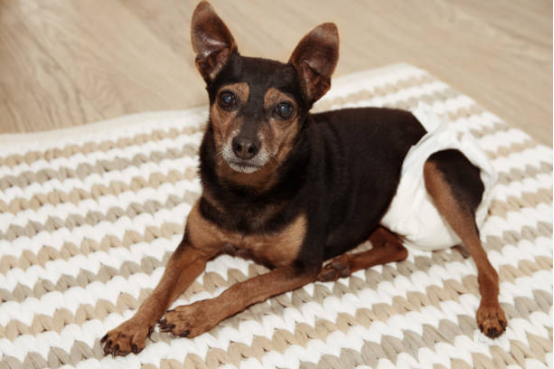
Three preheating methods
The following three methods are all done before you let your dog wear dog diapers . They can be used individually or in combination for better results.
| method | Required time/conditions | Steps | Advantages & Notes |
| 1. Handheld/Clothes Preheating Method | About 1-2 minutes (depending on the thickness of the material) | – After removing the product, rub the outer waterproof membrane and the edges of the absorbent layer with your hands to warm them up. – You can also place the product between thick clothing or a towel and press and rub it a few times. | Advantages: No electrical appliances required, safe, and quick to prepare. Be careful not to leave dog diapers exposed to heat or directly near a fire/heater for long periods of time to avoid damaging the material. |
| 2. Warm water wipes/warm towel preheating method | 2-3 minutes | – Wet a wipe or towel with warm water (not too hot, just enough for the back of your hand) and wring it out until slightly damp. – Gently wrap the outer layer of the dog diaper in the wipe/towel and let it sit for a while to allow the warmth to transfer. – Finally, gently shake dry the dog diaper until it is semi-dry before wearing. | Advantages: Can preheat all parts more evenly (especially the edges and tail holes). Be careful not to make the wipes too wet to avoid introducing moisture into the absorbent and causing premature dampness or deformation of the fabric. |
| 3. Home heating + pre-dressing practice method | 5-10 minutes of practice, once a day | – In a heated area at home, let your dog wear the diapers and move around for a few minutes (e.g., walk around, sit, or lie down for a few rounds). – In a slightly warm room with no direct draft, allow the diapers to reach a temperature close to the dog’s body temperature. – Use treats and petting to help your dog feel comfortable wearing the diapers . | Advantages: The dog will be more psychologically receptive; warm-up and acclimatization are done simultaneously. Make sure the room is not too dry and the temperature is not too high, causing sweating; adjust the training time based on the dog’s condition. |
4. Winter clothing and care guide
In addition to preheating, some winter-specific usage and care tips are also important to further reduce the discomfort caused by freezing.
Key Steps
Choose dog diapers made of the right material for winter
- Materials with soft edges and softer waterproof membranes (such as thin PUL or flexible TPU) are preferred;
- The absorbent body should absorb water quickly and lock in moisture well, but it should not be too thick to avoid causing pressure after becoming hard.
Pre-trial fitting and adaptation training
Just like the experience of “Snowball”, wear it indoors before the cold period to allow the dog to adapt to the hardness (after preheating) and feel.
Wear it for a short time each time and increase it slowly.
Pay attention to fit and cover when wearing
- Make sure the tail hole is aligned and do not allow the edges to pull or misalign the tail or legs;
- The waistband should be moderately tight and not constricting; the leg edges should fit snugly but not press against the skin;
Keep skin clean and dry
- When changing, clean the contact area with warm water or unscented wipes and wipe dry;
- Before or after the skin is wet or frozen, apply pet-specific moisturizing cream or skin care cream to prevent the skin from drying out;
Ambient temperature coordination
- Avoid letting your dog walk outside for a long time in windy or cold environments;
- On cold nights, let your dog sleep on a warm mat or use a dog blanket;
- The temperature in the room should not be too low. You can use a heater or floor heating at night (pay attention to safety).
5. Common Problems and Solutions
| question | Cause Analysis | Corresponding solutions |
| The edge makes a clicking sound or is hard when touched. | Insufficient preheating/the material is too thick and the waterproof layer is too hard | Use wet wipes or clothing to preheat the edges, high softness material is preferred; choose a thin waterproof layer |
| The dog is unwilling to fit the edge, pulls its legs back or lifts its feet | Strong cold feeling/hard edges/uncomfortable adhesive method | Preheat the edges first to make them warm and soft; use positive guidance to combine snacks; adjust the fit and position |
| The absorbent body feels colder after getting wet, and the inside becomes hard and uncomfortable | The absorbent body is slow to absorb moisture and dries slowly/the outer layer has poor thermal insulation | Try it on in advance and change it frequently; use quick-drying styles or a more breathable outer material; let your dog move around before taking it off to promote blood circulation |
| Dog diapers freeze hard during sleep on winter nights , causing skin indentations or redness. | Long-term close contact with the body + low temperature leads to increased material rigidity | Reduce the time of wearing the diaper at night; add a warming pad or blanket at night; use the preheating method to increase the temperature of the dog diapers before wearing |
Summarize
dog diapers may seem like a minor issue during the winter , they can actually cause significant discomfort and even lead to skin irritation, friction, or behavioral issues. Preheating your diaper, choosing the right material, and maintaining proper care can significantly reduce this risk.
Review of the three major warm-up methods:
- Handheld/clothing friction method
- Warm wipes/warm towel wrap method
- Home heating pre-installation exercises
By choosing the right material, keeping it clean and dry, managing the ambient temperature, and adjusting the fit, your dog can safely wear dog diapers in cold weather without the irritation of freezing. I hope this guide helps you and your dog enjoy a more comfortable winter.