
How to identify flea feces on dogs and deal with them effectively

Flea droppings may sound unpleasant, but they’re a crucial clue that can help dog owners identify a flea problem. If you notice tiny black spots on your dog’s coat, don’t panic—they could be flea droppings. So, how can you be sure these spots are flea droppings? And how can you effectively address a flea problem? Don’t worry, we’ll answer these questions one by one to help you better care for your dog.
What are flea poops?
Flea feces, in simple terms, is the waste product of fleas. It consists of the remnants of blood that fleas have fed on their dogs. When fleas bite and suck blood from a dog’s skin, they excrete the undigested blood as tiny black particles. These particles may look like dust or debris in a dog’s fur, but they are actually flea “excrement.”
At this point, some friends may wonder, “How do you spot these black spots?” Don’t worry, I will teach you how to judge them.
How to identify flea droppings?
- Look for black particles.
Flea droppings are usually black or dark brown particles, about the size of small grains of rice or sand. If you see these particles in your dog’s fur, especially on the back, tail base, and belly, they are likely flea droppings. - tissue
to rub the black spots. If they are flea feces, the black spots on the tissue will turn red because they are actually made up of undigested blood. This won’t happen with ordinary dust or dirt. - your dog
‘s skin, you can almost be sure that the black spots are flea droppings. Flea droppings and fleas are inseparable.
Why are flea poops a concern?
Although flea droppings themselves do not directly cause serious health problems, they do tell us an important signal: fleas have already settled on your dog. When fleas bite dogs, it will cause severe itching. Dogs may scratch constantly, causing skin damage and even skin infections, allergies and other problems.
Moreover, if flea infestations are not treated promptly, they may also spread some diseases. Therefore, it is very necessary not to ignore the appearance of flea droppings and take timely measures.
How to deal with flea problems?
- Use flea control medication.
There are many types of flea control medications on the market, including oral medications, topical drops, flea collars, etc. Choose a control method that is suitable for your dog, and it is best to purchase and use it under the advice of your veterinarian. - Regularly combing your dog’s coat
not only helps remove fleas and flea droppings, but it also helps detect flea eggs or larvae. This is a very simple but effective preventative measure that can detect and treat flea problems before they develop. - Keep your home clean.
Fleas don’t just live on dogs; they can also hide in soft furnishings, carpets, and even bedding. Therefore, regular home cleaning is key to preventing flea infestations. Thoroughly vacuuming floors, sofas, and bedding, and regularly washing your dog’s mattress and toys, is essential. - Bathing your dog and using flea lotion
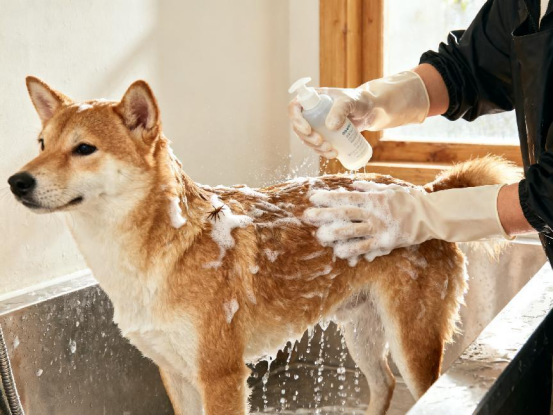
: Bathing your dog with a flea lotion can help cleanse the skin and remove fleas and their feces. Bathing can also relieve itching and inflammation caused by flea bites. During bathing, be sure to check your dog’s skin for any infection or redness. - While dog diapers are
typically used to help dogs eliminate waste indoors, they can provide additional protection in some situations, particularly when a dog is experiencing skin irritation from flea bites. Dog diapers prevent direct contact with bedding and other furniture, reducing further irritation. They can also provide additional comfort for dogs who are unable to control their own urination. - already
infected with fleas and the symptoms are severe, it is very important to take it to the veterinarian. The veterinarian can provide professional advice and treatment plans to help your dog recover.
in conclusion
Flea droppings, while just a small sign, are a warning sign of a flea infestation. Promptly identifying these black spots and taking effective treatment can prevent further harm to your dog’s health. By using appropriate flea control medications, regular cleaning, proper use of dog diapers , and maintaining healthy skin, you can help keep your dog flea-free and ensure they grow up healthy and happy.
Remember, prevention is always better than cure. Regularly checking your dog’s skin, keeping your home clean, and using dog diapers when needed can all help prevent fleas. If a flea problem arises, taking action early will provide your dog with increased comfort and protection.