
Repairing Dog Diapers Velcro: Tips for Strengthening Worn Fasteners

and how Honestly, dog diapers may seem insignificant, but once the Velcro wears out—it can be incredibly frustrating. They won’t fasten properly, they’ll slip off, they’ll come undone with a flick of the tail… not only embarrassing but also affecting hygiene and protection. So today, let’s talk about some practical tips: how to repair worn-out Velcro, how to reinforce it, and how to make your dog diapers last longer and stay in place.
Table of Contents
Why do the Velcro straps on dog diapers wear out so quickly? The reasons are more complex than you think.
If you’ve ever observed the structure of Velcro, you’ll notice it’s made up of countless tiny hooks and loops of yarn. These small components may seem sturdy, but on dog diapers, they have to withstand—
- Dog activities
- Cleaning friction
- Hair and debris interference
- Repeatedly fold
This pressure is far greater than that on clothing. Especially since a dog’s belly bends, this has a more significant impact on the grip of Velcro.
Therefore, the wear and tear characteristics are mostly as follows:
- But it doesn’t stay secure when fastened.
- The hook and loop were covered in lint.
- The terry loops collapsed and no longer stood up.
- Corner curling reduces grip.
To put it simply, alternating between short and long sentences: these problems accumulate over time, and without repair or maintenance, the dog diapers will soon “declare retirement.”
The good news is that in most cases, you don’t need to immediately replace the product. Cleaning, repairing, replacing, or reinforcing—there’s bound to be a solution for you.
The first step, cleaning, works better than you think.
Often 99% of people assume the Velcro is broken as soon as they see it stop gripping. But the truth is often
It got stuck in the hair.
-and-loop Or perhaps dust or fibers fill the hook-and-loop structure, leaving it without any “grip” to hook.
I recommend starting with this basic cleaning routine (it’s simple but often overlooked):
Three-step cleaning strategy
- Use an old toothbrush or fine-toothed comb to brush away surface debris.
- Use a needle or toothpick to remove the tangled hair.
- Repeatedly fasten and test to see if the grip strength recovers.
Slight, instant effect: Sometimes, just a quick cleaning can restore about 60% of the stickiness of the Velcro.
By the way, if your dog has long fur, especially a Golden Retriever, Pomeranian, or Poodle, the chances of fur getting tangled in the Velcro straps are much higher. Regular cleaning is more important than repairs.
Step Two: Mild Repair—A stitch and a small patch replacement can save the patient.
If the Velcro still isn’t working after cleaning, then it’s time to move on to the “hands-on” section. Don’t worry, this isn’t a complicated project only sewing experts can handle.
Method 1: Sew along the edge
This type of repair is mainly applicable to:
- Velcro edges loose
- The thread broke
step:
- Cut the old thread
- Sew along the edge in small steps using strong thread.
- Sew a repair close to the hook loop to enhance stability.
A gentle reminder: the movements don’t need to be perfect, as long as they are practical.
Method 2: Replace local Velcro blocks
Suitable:
- Partial complete failure
- The loops have collapsed, or the hooks have broken.
The operation is very simple:
- Cut off the damaged section
- Sew on new Velcro patch
- The length is the same as or slightly longer than the original strip.
This method is like repairing a hole in jeans; you don’t have to replace the whole pair, you only need to repair the damaged area.
In my personal experience, patching a small patch is often less effort and more durable than replacing the entire strip.
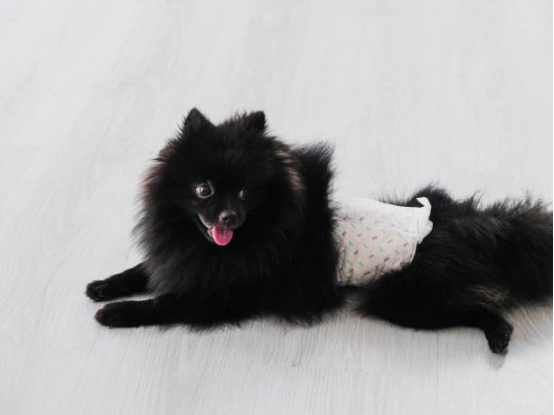
Strengthening measures: Prevention is better than cure
Honestly, if you use your dog diapers daily and clean them frequently, repairs alone aren’t enough. Strengthening is the key strategy for extending their lifespan.
Strategy 1: Upgrade the material of Velcro
ordinary and high-density structures
is:
- Higher hook density
- Terry cloth has stronger tensile strength
- Longer service life
Brands like Dog Diapers will often tell you whether they use high-strength Velcro, but not every brand adheres to this. When replacing or reinforcing, you can choose a more durable material yourself.
Strategy 2: Increase the area of the Velcro strap
This is a very useful little tip:
Increased width = increased grip = decreased failure rate
The principle is actually quite simple—more hooks and loops create more grip and prevent the fur from coming undone. This is especially suitable for active breeds such as Shiba Inus, Corgis, and Border Collies.
Advanced reinforcement methods: For greater stability, you can use these methods.
Here are two reinforcement techniques that are often used in craft rings:
Reinforce with fabric adhesive
Applicable to:
- Locations that are inconvenient to sew
- Needs quick repair
Be careful not to use too much, as this may cover the hook and loop structure.
Add a “pressure-bearing fabric layer.”
Adding a fabric layer under the Velcro straps can evenly distribute pressure. It’s similar to adding a “shim.”
This method is not mandatory, but it is effective, especially for medium- to large-sized dogs.
Routine maintenance: Extending the lifespan of repair results
A few simple steps can double the lifespan of Velcro:
- The buckle closes during cleaning.
- Avoid high-temperature drying
- Avoid vigorous mixing mode
- Regular hair removal
Its core principles are reducing friction and avoiding high temperatures.
Sometimes a one-second inconvenience can save you tens of yuan in replacement costs.
When should you stop repairing? In these situations, just replace it directly.
Not all Velcro straps are worth repairing. In the following cases, replacing them is more convenient and less troublesome:
- A large area of the Velcro strap is broken
- Damaged bottom fabric
- Even after multiple attempts, I still couldn’t catch up.
- The dog was clearly uncomfortable wearing it.
If dog diapers are clearly affecting leak prevention, replacing them is a better option. It’s better to save a little money than to replace products that negatively impact hygiene and user experience.
Recommended usage scenarios: Which families or dogs are they suitable for?
Based on repair and reinforcement, I would recommend it for the following households:
- Multi-dog families
- Frequent washing
- High-activity dog breeds
- Post-operative care or long-term use in older dogs
Dogs have different needs, so dog diapers need to be adapted to different levels of durability. Repairing and reinforcing them is to ensure greater peace of mind for daily use.
- The Velcro isn’t gripping? Don’t yell at it yet; clean it first.
- A corner is faulty? Replacing it with a patch is more reliable than replacing the whole thing.
- High activity levels? Widening and reinforcing the structure is definitely worthwhile.
- Want it to last longer? Then you need to keep up with the maintenance.
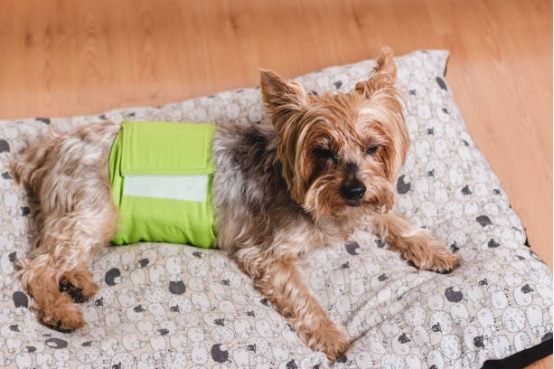
Conclusion: Making dog diapers more secure and worry-free
Ultimately, repairing dog diapers with Velcro isn’t just for DIY enthusiasts. As long as you understand the principles and know when to clean, repair, and change diapers, you can easily extend the life of a single diaper by several months or even longer.
Most importantly, this is not simply about saving money but about comfort, protection, and hygiene.
There’s a real sense of accomplishment when you find yourself easily reviving a dog diaper that’s about to retire—like upgrading your pet’s gear.